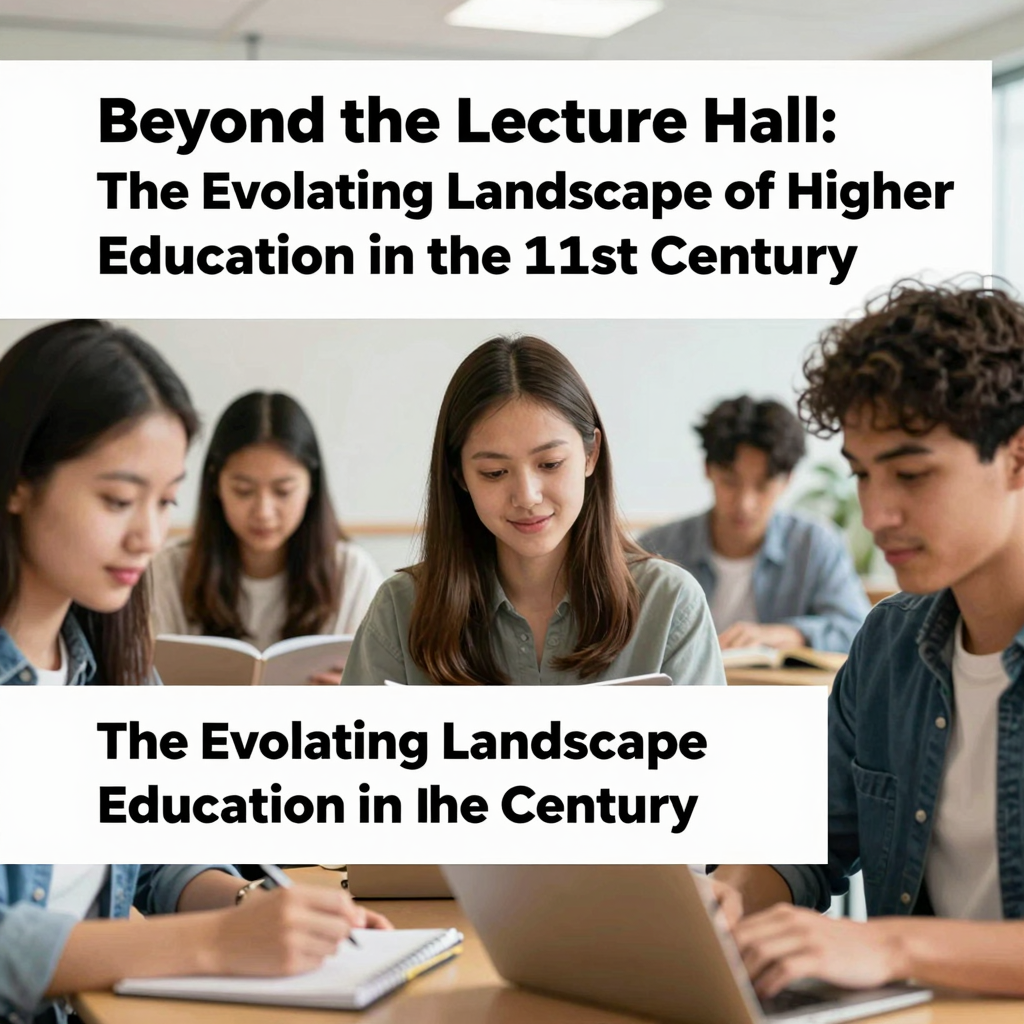
For centuries, the ivy-covered walls of universities have stood as immutable symbols of knowledge, tradition, and societal advancement. The very phrase “higher education” conjures images of sprawling campuses, late-night study sessions in grand libraries, and the ceremonial donning of cap and gown. It has long been perceived as the definitive gateway to professional success, personal growth, and a more enlightened life. Yet, standing at the crossroads of technological revolution, economic shifts, and global interconnectedness, the institution of higher education is undergoing a profound transformation. It is no longer just about earning a degree; it is about navigating a complex, dynamic ecosystem designed to prepare individuals for a world of constant change. This article explores the multifaceted evolution of higher education, examining its enduring value, the disruptive forces reshaping it, and the emerging models that promise to redefine what it means to learn, grow, and succeed.
The Enduring Pillars: Why University Still Matters
Despite the rise of alternative pathways, the traditional university experience retains significant, powerful advantages. Its value extends far beyond the content of textbooks. At its core, a robust higher education provides structured intellectual maturation. It teaches students not merely what to think, but how to think—critically, analytically, and creatively. Through exposure to diverse disciplines, from philosophy to physics, students develop a holistic understanding of the world and their place within it. This cultivation of a flexible, inquisitive mind is perhaps the most durable asset a graduate can possess, equipping them to tackle problems we cannot yet foresee.
Furthermore, the campus environment is a unparalleled crucible for personal and professional development. It is where soft skills—communication, collaboration, time management, resilience—are tested and honed in real-time. Group projects, campus organizations, and even navigating roommate conflicts provide practical training for future workplace dynamics. The network built during these years, comprising peers, mentors, and professors, often becomes a lifelong professional and personal resource. This combination of credentialing, skill-building, and network-access remains a compelling formula for launching careers in established fields like law, medicine, academia, and engineering.
Disruption and Challenge: The Forces Reshaping the Academy
The traditional model is facing unprecedented pressure from multiple fronts. The most glaring challenge is the skyrocketing cost and student debt crisis. In many countries, tuition fees have far outpaced inflation and wage growth, leaving graduates burdened with loans that delay life milestones like home ownership or starting a family. This financial reality forces a brutal cost-benefit analysis, pushing prospective students and their families to demand clearer returns on investment and question the “default” path of a four-year residential degree.
Concurrently, the digital revolution has democratized access to information. Platforms like Coursera, edX, and MasterClass offer world-class instruction from elite institutions for a fraction of the cost. Technology companies have also pioneered industry-recognized certification programs in high-demand areas like coding, data analysis, and digital marketing. These alternatives pose a direct challenge to the university’s monopoly on credentialing, particularly for career-switchers or those seeking specific, job-ready skills.
Finally, there is a growing skills gap between graduate output and employer needs. The pace of technological change often outstrips curriculum development, leading to a mismatch where graduates possess theoretical knowledge but lack applied, cutting-edge competencies. Employers increasingly prioritize demonstrable skills, portfolios, and problem-solving abilities over the name of a degree-granting institution alone.
Key Modern Challenges:
- Financial Accessibility: The burden of student debt and questions of ROI.
- Technological Competition: The rise of MOOCs, bootcamps, and digital credentials.
- Relevance & Agility: Ensuring curricula keep pace with a rapidly changing job market.
- Inclusivity & Equity: Broadening access and support for non-traditional and underrepresented students.
The Future is Hybrid: Emerging Models and Adaptive Strategies
In response to these challenges, the most innovative institutions are not defending their old models but radically adapting. The future of higher education is increasingly hybrid, flexible, and learner-centric. We are witnessing the rise of blended learning environments that seamlessly combine online and in-person instruction, offering students greater autonomy over their time and learning style. Micro-credentials—digital badges, nanodegrees, and certificates—allow learners to stack qualifications, building a portfolio of skills tailored to their career trajectory without necessarily committing to a full multi-year degree.
The curriculum itself is being reimagined. There is a marked shift towards interdisciplinary and experiential learning. Programs now deliberately merge computer science with ethics, business with environmental studies, and design with psychology. Capstone projects, co-ops, and mandatory internships bridge the gap between theory and practice, ensuring students graduate with tangible experience. Furthermore, the focus is expanding from first-job placement to lifelong career resilience. Universities are positioning themselves as continuous learning partners, offering alumni access to updated courses, career counseling, and re-skilling opportunities throughout their professional lives.
Components of a Modern Education:
- Blended & Online Delivery: Flexibility in how and when learning occurs.
- Competency-Based Progression: Advancing upon mastery, not just seat time.
- Interdisciplinary Focus: Solving complex problems that don’t respect academic silos.
- Explicit Skills Development: Embedding coding, data literacy, communication, and critical thinking across all majors.
Conclusion: A More Expansive Definition of Success
The journey of higher education is evolving from a linear, one-time event into a multifaceted, lifelong continuum. The universities that will thrive are those that embrace their role not merely as transmitters of specialized knowledge, but as architects of adaptive, holistic human potential. They must balance the preservation of timeless intellectual traditions with the agility to meet contemporary demands. For the modern learner, the choice is no longer simply “college or not.” It is about strategically navigating a rich landscape of options—from traditional degrees and online micro-credentials to bootcamps and self-directed learning—to construct a unique, resilient pathway. Ultimately, the true promise of higher education in this new era is its potential to empower individuals not just with a job, but with the cognitive tools, ethical framework, and adaptive capacity to build meaningful careers and contribute to a rapidly changing world.