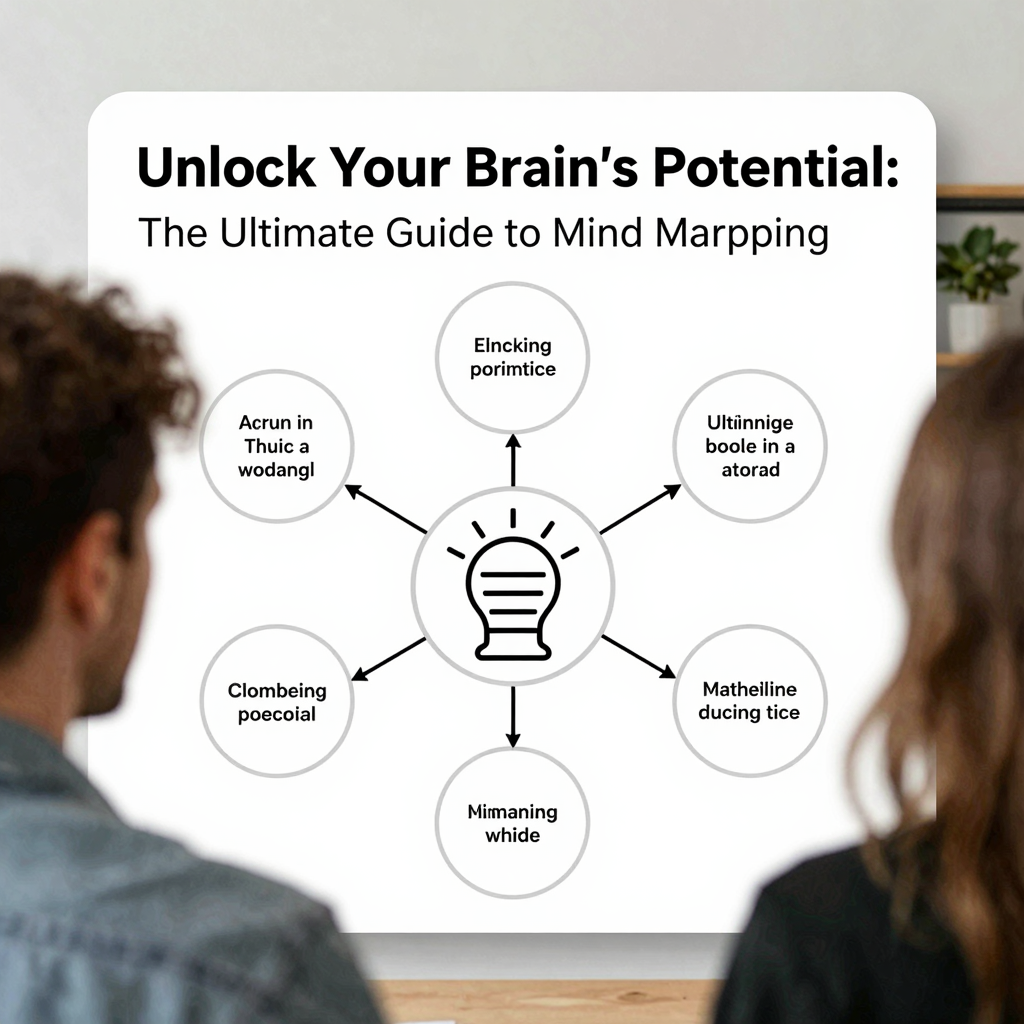
In our fast-paced, information-saturated world, the ability to organize thoughts, generate ideas, and solve problems efficiently is more valuable than ever. Traditional linear note-taking often falls short, leaving us with disconnected facts and stifled creativity. Enter mind mapping – a powerful visual thinking tool that mirrors the brain’s natural way of processing information. Far from being just a simple diagram, mind mapping is a structured brainstorming technique that can revolutionize how you learn, plan, and create. By leveraging colors, images, and branches, mind maps transform complex ideas into clear, memorable, and interconnected visual landscapes.
What Exactly is Mind Mapping?
At its core, a mind map is a diagram used to visually organize information. It starts with a central idea, theme, or problem placed prominently in the center of a page (physical or digital). From this central node, major related concepts radiate outward as branches. These primary branches then sprout secondary and tertiary branches, representing sub-topics, details, examples, and associations. Unlike linear lists, mind maps embrace the non-linear nature of human thought.
The Core Principles
The modern concept of mind mapping is largely credited to Tony Buzan, a British psychologist and author who popularized it in the 1970s. Buzan emphasized several key principles for creating effective mind maps:
- Start with a Central Image: Use a strong, colorful image or keyword in the center to capture attention and represent the main theme.
- Use Keywords, Not Sentences: Single, evocative words or short phrases are placed on branches to capture the essence of ideas.
- Embrace Color: Assign different colors to main branches to stimulate the brain, aid memory, and visually categorize information.
- Incorporate Images and Symbols: Pictures, icons, and symbols are processed faster by the brain than text and enhance recall.
- Utilize Curved Lines (Organic Branches): Avoid straight lines; use flowing, organic curves for branches to make the map more visually appealing and less rigid.
- Emphasize Hierarchy and Association: The proximity of branches to the center and their connections visually depict the importance and relationship of ideas.
Mind Mapping vs. Other Visual Tools
While often grouped with concept maps or flowcharts, mind maps have distinct characteristics:
- Concept Maps: Tend to be more hierarchical and structured, often focusing on relationships between concepts with linking words on connecting lines. They are excellent for showing complex interconnections in systems.
- Flowcharts: Primarily depict processes, sequences, or workflows in a step-by-step, linear fashion.
- Mind Maps: Prioritize radical visual thinking and free association radiating from a central point. They are designed for brainstorming, capturing the ‘big picture,’ and stimulating creative leaps.
Mind maps excel at the initial stages of thought organization – capturing the chaos of ideas and giving it a structured yet flexible form.
The Multifaceted Benefits of Mind Mapping
The true power of mind mapping lies in its versatility and the wide range of cognitive benefits it offers. It’s not just about drawing pretty pictures; it’s about enhancing how your brain works.
Enhanced Learning and Memory
Mind maps leverage several principles of cognitive psychology to boost learning and retention:
- Dual Coding Theory: By combining verbal information (keywords) with visual information (colors, images, spatial arrangement), mind maps create multiple pathways for recall in the brain.
- Active Engagement: The act of creating the map – choosing keywords, drawing branches, selecting colors – requires deeper processing than passive note-taking.
- Chunking: Information is broken down into manageable ‘chunks’ (branches and sub-branches), making complex subjects easier to digest.
- Association: The spatial layout and connecting branches explicitly show relationships between ideas, strengthening memory links.
Studies have shown that students who use mind maps often perform better on recall tests compared to those using traditional linear notes.
Supercharged Creativity and Problem Solving
Mind mapping is a powerhouse for creative thinking. Its non-linear structure encourages:
- Divergent Thinking: Starting from a central point, the mind is free to explore multiple avenues simultaneously without the constraints of sequence.
- Making Unexpected Connections: The visual proximity of seemingly unrelated branches can spark novel associations and innovative solutions.
- Overcoming Mental Blocks: When stuck, adding a new branch or doodling an image can unlock fresh perspectives.
- Visualizing Problems: Mapping out a problem, its potential causes (branches), and possible solutions (sub-branches) provides a comprehensive overview that linear lists cannot match.
For brainstorming sessions, whether solo or group, mind maps provide a dynamic canvas to capture and connect ideas rapidly.
Improved Planning and Organization
Beyond creativity, mind maps offer exceptional structure for planning and managing projects, tasks, and goals:
- Project Management: Use the central node for the project name, main branches for key phases (e.g., Research, Design, Development, Testing, Launch), and sub-branches for specific tasks, deadlines, and responsible parties.
- Goal Setting: Place your main goal in the center. Branches can represent different areas of focus (e.g., Career, Health, Relationships, Finances), with sub-branches detailing actionable steps, resources needed, and milestones.
- Meeting Agendas & Notes: Start with the meeting topic. Branches can represent agenda items, discussions points, decisions made, and action items assigned, creating a clear and concise record.
- Content Creation & Writing: Map out article structures, book chapters, or presentation flows. The central topic branches into main sections, then into key points, examples, and references.
The visual overview provided by a mind map makes complex plans manageable and highlights dependencies and priorities at a glance.
How to Create Effective Mind Maps: From Analog to Digital
Creating a mind map is simple and accessible, requiring minimal tools. The process itself is part of the cognitive benefit.
The Analog Approach: Pen and Paper
Many purists, including Tony Buzan, advocate starting with physical tools:
- Materials: A large, blank sheet of paper (A3 or larger is ideal), colored pens, pencils, or markers.
- Process:
- Start in the center with your main idea (draw an image or write a keyword).
- Draw thick, curved branches radiating outwards for each main theme or category related to your central idea. Use a different color for each main branch.
- Write one or two keywords per branch.
- Add sub-branches to each main branch for more specific details, facts, or ideas.
- Use images, symbols, and doodles liberally to represent concepts.
- Don’t worry about perfection; let the ideas flow and the map evolve organically.
- Benefits: Tactile experience, complete freedom of form, no software constraints, encourages sketching and doodling which boosts creativity.
The Digital Advantage: Software and Apps
Digital mind mapping offers powerful features for flexibility and collaboration:
- Popular Tools: MindMeister, XMind, iMindMap, Ayoa, SimpleMind, Miro (for collaborative mapping), and many others.
- Key Features:
- Easy editing, moving, and restructuring of branches.
- Adding icons, clipart, hyperlinks, and attachments (files, notes).
- Changing themes, colors, and branch styles with a click.
- Exporting maps to various formats (PDF, image, text, Word, PowerPoint).
- Real-time collaboration for team brainstorming or project planning.
- Presentation modes that unfold the map step-by-step.
- Benefits: Neatness, easy editing, storage and sharing, integration with other tools, advanced features like task management and presentation modes.
Whether you choose analog or digital depends on personal preference and the specific task. Many find starting on paper liberating and then digitizing the map for refinement and sharing.
Tips for Maximizing Your Mind Map
Regardless of the medium, keep these tips in mind:
- Focus on Keywords: Resist writing sentences. Use single, powerful words that trigger associations.
- Prioritize Images: A picture truly is worth a thousand words, especially for memory. Even simple sketches help.
- Use Color Strategically: Assign meaning to colors (e.g., red for urgent tasks, green for resources).
- Embrace White Space: Don’t cram the page. Allow the map room to breathe and expand.
- Review and Refine: Mind maps are living documents. Revisit them to add new ideas, prune irrelevant branches, or reorganize.
- Make it Personal: Use symbols, colors, and layouts that make sense *to you*. Personalization enhances memory.
Practical Applications: Where Mind Maps Shine
The versatility of mind mapping means it can be applied to virtually any field or personal endeavor. Here are just a few examples:
Academic Excellence
- Note-Taking: Transform dense lectures or textbook chapters into clear, visual summaries during or after learning.
- Essay and Thesis Planning: Structure arguments, identify supporting evidence, and ensure logical flow before writing.
- Exam Revision: Condense entire subjects onto a single map for efficient review. The visual layout aids recall under pressure.
- Understanding Complex Subjects: Break down intricate topics in science, history, or philosophy into understandable chunks and relationships.
Business and Productivity
- Strategic Planning: Map out business goals, SWOT analyses (Strengths, Weaknesses, Opportunities, Threats), market research findings, and growth strategies.
- Project Management: Plan projects visually, assign tasks, track progress, and manage resources (as detailed earlier).
- Meeting Management: Create agendas, capture minutes visually, and assign action items clearly.
- Product Development & Brainstorming: Generate and organize ideas for new features, services, or marketing campaigns.
- Problem Solving: Analyze root causes of issues, explore potential solutions, and evaluate their pros and cons.
Personal Growth and Life Management
- Goal Setting: Define life goals across different areas (career, health, personal development, relationships, finances) and plan actionable steps.
- Decision Making: Weigh options, list pros and cons, and visualize potential outcomes for significant life choices.
- Planning Events: Organize weddings, vacations, or parties by mapping out logistics, guest lists, budgets, and schedules.
- Learning New Skills: Map out the steps, resources, and practice required to master a new language, instrument, or hobby.
- Journaling & Reflection: Use mind maps to explore feelings, experiences, and insights in a non-linear, visual way.
Conclusion
Mind mapping is far more than just a note-taking technique; it’s a fundamental shift in how we approach thinking, learning, and organizing information. By visually capturing the radiant and associative nature of our thoughts, mind maps unlock creativity, enhance memory, clarify complex ideas, and streamline planning. Whether you’re a student grappling with exams, a professional navigating intricate projects, or an individual seeking to organize your life and goals, incorporating mind mapping into your toolkit offers profound benefits. It democratizes complex cognitive strategies, making powerful thinking accessible to anyone with a pen and paper or a digital device. Start simple – take a blank page, write down your central idea, and let your thoughts branch out. You might be surprised at the clarity, creativity, and potential you unlock within your own mind.